
Embracing Knowledge and Mercy in Islamic Tradition
 Imam Al-Ghazali
Bridges reason and spirituality with guidance rooted in Islamic theology, ethics, and inner purification through Sufi tradition.
Imam Al-Ghazali
Bridges reason and spirituality with guidance rooted in Islamic theology, ethics, and inner purification through Sufi tradition.
Understanding the Essence of Islamic Teachings
In the luminous tapestry of Islamic teachings, we find the threads of knowledge, worship, mercy, character, and community intricately woven together. Each thread plays a vital role in shaping the believer’s journey towards spiritual awakening and a harmonious life in accordance with divine guidance. In this exploration, we shall reflect upon these fundamental aspects, embracing the rich diversity within our tradition while fostering a spirit of mutual respect.
The Pursuit of Knowledge
Knowledge is a venerable pursuit in Islam, regarded as the light that illuminates the path to understanding oneself and the Creator. The Prophet Muhammad (peace be upon him) emphasized the importance of seeking knowledge, stating that it is an obligation for every Muslim, male and female. This pursuit is not solely confined to religious studies; rather, it extends to all facets of life, encouraging us to engage with the world critically and thoughtfully.
- Reflective Question: What steps can you take to deepen your understanding of both religious and worldly knowledge?
Worship: A Journey of the Heart
Worship, in its essence, transcends mere rituals; it is an act of devotion that engenders a profound connection with Allah. The five pillars of Islam provide a framework for this connection, but true worship emanates from the heart. It invites sincerity, humility, and a recognition of our dependence on the Divine.
Moreover, worship is not restricted to formal acts such as prayer and fasting. Every act performed with the intention of pleasing Allah—be it kindness to others, seeking knowledge, or fulfilling one’s responsibilities—can be considered a form of worship. This expansive view encourages us to cultivate a mindset of continual devotion in our daily lives.
- Reflective Question: How can you incorporate a spirit of worship into your daily activities?
The Role of Mercy in Our Lives
Mercy is a cornerstone of Islamic ethics, a quality that reflects the very nature of Allah, the Most Merciful. It is through mercy that we learn to empathize with others, to forgive, and to extend compassion beyond our immediate circles. The Quran frequently reminds us of the importance of mercy, urging us to embody this attribute in our interactions.
Practicing mercy requires us to confront our own shortcomings and to approach others with understanding rather than judgment. As we strive to emulate divine mercy, we cultivate a more harmonious community, one that is grounded in love and support.
- Reflective Question: In what ways can you show mercy to those around you, especially during challenging times?
Character: The Foundation of Our Actions
Character, or akhlaq, is an integral aspect of a Muslim’s identity. The Prophet Muhammad (peace be upon him) is described as possessing the best of character, serving as an exemplar for all believers. Good character encompasses honesty, integrity, patience, and humility. It is the manifestation of one’s faith in action, influencing not just personal conduct but also the broader community.
To cultivate good character, we must engage in continuous self-reflection and strive to align our actions with our values. This journey necessitates accountability, both to ourselves and to others, as we seek to embody the principles that define us as Muslims.
- Reflective Question: What personal qualities do you wish to develop further, and how can you work towards that goal?
Community: A Source of Strength
The concept of ummah, or community, is central to Islamic teachings. It reminds us that we are not solitary beings but rather part of a larger collective. The bonds we forge with one another provide support, encouragement, and a sense of belonging. In Islam, community is both a blessing and a responsibility; we are called to care for one another, especially the marginalized and vulnerable.
Engaging in community service, fostering inclusivity, and promoting understanding among diverse groups are all ways to embody the spirit of ummah. As we navigate the complexities of modern life, it is crucial to remember that our strength lies in unity and collaboration.
- Reflective Question: How can you contribute positively to your local community?
Respecting Scholarly Perspectives
Islamic scholarship is rich and diverse, encompassing a wide range of interpretations and opinions. This diversity is a testament to the depth and breadth of Islamic thought, reflecting the various contexts and cultures in which our tradition has flourished. As seekers of knowledge, it is essential to approach differing viewpoints with respect and an open heart, recognizing that our understanding of the divine is enriched through dialogue and mutual learning.
Engaging with scholars and knowledgeable individuals within your community can provide valuable insights, but it is equally important to develop your own critical thinking. This balance allows for personal growth while remaining rooted in the teachings of Islam.
- Reflective Question: How can you cultivate a respectful attitude towards differing scholarly opinions?
Conclusion: A Lifelong Journey
The journey of faith is a lifelong endeavor, marked by continuous learning, growth, and reflection. As you navigate the complexities of life, remember that the teachings of Islam offer a guiding light. Embrace knowledge, embody mercy, cultivate good character, foster community, and approach diverse perspectives with respect. In doing so, you will not only enhance your own spiritual journey but also contribute positively to the world around you.
May Allah guide us all in our quest for understanding and help us embody the noble principles that define our beautiful tradition. As we engage with one another in this sacred endeavor, let us remember the essence of our faith—compassion, unity, and the pursuit of knowledge.
Continue with Imam Al-Ghazali
 Embracing Knowledge and Mercy in Islamic Teachings
The Essence of Knowledge in Islam As we navigate through the vast ocean of Islamic teachings, it is…
Embracing Knowledge and Mercy in Islamic Teachings
The Essence of Knowledge in Islam As we navigate through the vast ocean of Islamic teachings, it is…
 Cultivating Knowledge and Compassion in Islamic Life
The Essence of Islamic Teachings In the journey of life, dear seekers of truth, we find ourselves often…
Embracing Knowledge and Mercy in Islamic Life
Introduction In the journey of life, knowledge and worship serve as twin pillars that uphold our faith and…
Cultivating Knowledge and Compassion in Islamic Life
The Essence of Islamic Teachings In the journey of life, dear seekers of truth, we find ourselves often…
Embracing Knowledge and Mercy in Islamic Life
Introduction In the journey of life, knowledge and worship serve as twin pillars that uphold our faith and…
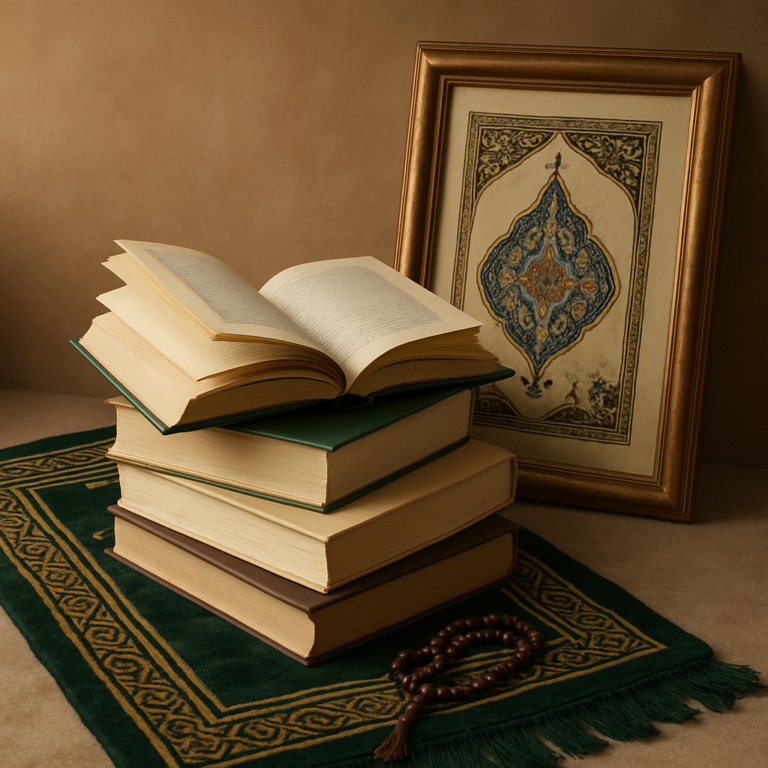 Embracing Islamic Teachings: A Journey of Knowledge and Mercy
Introduction In the beautiful tapestry of Islam, we find a rich tradition that emphasizes knowledge, worship, mercy, and…
Embracing Islamic Teachings: A Journey of Knowledge and Mercy
Introduction In the beautiful tapestry of Islam, we find a rich tradition that emphasizes knowledge, worship, mercy, and…
 Embracing Islamic Teachings: A Journey of Knowledge and Community
Introduction to Islamic Teachings In the vast and rich tapestry of Islamic teachings, we find a profound emphasis…
Embracing Islamic Teachings: A Journey of Knowledge and Community
Introduction to Islamic Teachings In the vast and rich tapestry of Islamic teachings, we find a profound emphasis…
 Embracing Islamic Teachings: A Journey of Knowledge and Mercy
Introduction In the rich tapestry of Islamic tradition, the teachings of the Qur’an and the Ahl al-Bayt provide…
Embracing Islamic Teachings: A Journey of Knowledge and Mercy
Introduction In the rich tapestry of Islamic tradition, the teachings of the Qur’an and the Ahl al-Bayt provide…